
Nutrition frameworks come and go, but the questions in the clinic stay remarkably consistent: What should I eat? What should I stop eating? What matters most for my condition? The new 2026 Food Pyramid puts nutrition guidance for patients into a sharper debate by elevating healthy fats and protein, while raising fresh questions about saturated fat guidance and what gets de-emphasised (including grains and fruit).
In day-to-day consultations, that makes the 2026 Food Pyramid a useful prompt for some patients, but it also means clinicians may need to clarify what “healthy fats and protein” looks like in practice and how their personal risk profile shapes “saturated fat guidance” within broader nutrition guidance for patients.
In this article, we will be exploring:
- Why is this pyramid getting attention now
- What matters most for physicians when a new model lands
- How physicians can use the 2026 Food Pyramid as a practical tool
- M3 Pulse: How likely are you to use it?
Why Is this Pyramid Getting Attention Now
Many physicians are seeing more patients arrive with a preference for “real food” eating patterns and fewer ultra-processed foods, often driven by social media, but also increasingly supported by observational evidence linking higher ultra-processed intake to poorer cardiometabolic outcomes.*
At the same time, public nutrition conversations have shifted towards satiety, energy stability, and glycaemic control, areas where higher-protein meals can be helpful for some patients when implemented sensibly within a nutrient-dense dietary pattern.*
Finally, fats are being re-evaluated in mainstream discussion. Patients hear “fat is back”, but clinical nuance still matters. Overall dietary pattern, type of fat, and individual cardiovascular risk influence how we frame saturated fat guidance in real consultations.*

What Matters Most for Physicians When a New Model Lands
A pyramid only earns a place in practice if it supports the realities of modern care: short appointments, multiple comorbidities, and wide variation in health literacy.
1) Does it simplify decisions or create extra clarification work?
For some patients, the 2026 Food Pyramid can simplify the message to build meals around whole foods, prioritise protein, choose healthier fats, and limit ultra-processed foods, which broadly aligns with major dietary guidance focused on nutrient-dense choices and limiting added sugars.*
- Carbs are always bad
- Full-fat dairy means unlimited cheese and butter
- Vegetables matter less than protein Fruit is too sugary for everyone
Whether it reduces confusion depends on the short translation you attach to it.
2) Can you adapt it quickly across different patient needs?
A tool has to flex across:
- cardiometabolic risk reduction
- diabetes and prediabetes counselling
- weight management, without oversimplifying
- older adults, where protein adequacy can be crucial
- cultural dietary patterns and affordability
If a model requires a long explanation, it usually does not survive day-to-day clinical use.
3) Is it compatible with evidence-based dietary patterns?
Most clinicians’ anchor nutrition advice to patterns with strong outcomes data. Mediterranean-style and DASH-style approaches are common examples for cardiovascular prevention.*
The Mediterranean pattern, in particular, has trial evidence supporting cardiovascular risk reduction, with benefits tied to the overall pattern rather than a single nutrient.*

How Physicians Can Use the 2026 Food Pyramid as a Practical Tool
Rather than using the pyramid as a prescriptive plan, it can work best as a fast clinical triage tool. In other words, it helps you identify what a patient is likely to do with the message, where risk might creep in, and what one adjustment will make the advice safer and more useful.
1) Use it as a “misinterpretation check” in the first 30 seconds
The pyramid’s biggest impact is often not what it recommends, but what patients assume it permits. Start by asking:
“When you look at this pyramid, what do you think it’s telling you to eat more of, and what to eat less of?”
This quickly reveals whether the patient is interpreting “healthy fats and protein” as whole-food choices or as a licence for highly processed, saturated-fat-heavy patterns. If cardiovascular risk is present, this is where you can steer towards unsaturated swaps as a practical anchor.*
2) Turn the pyramid into one concrete meal decision
Patients do not change diets in pyramids, they change diets in breakfasts, lunches, snacks, and supermarket habits. A useful move is to ask for one meal they can picture:
“What would tomorrow’s breakfast look like if you followed this?”
Then adjust with a single, specific “upgrade” not a list of rules. For example:
If breakfast becomes “protein plus coffee” add fibre and micronutrients with a simple option like yoghurt plus fruit, or eggs plus vegetables.
If fats become the headline, shift the focus to type and pattern: olive oil, nuts, seeds, oily fish, and minimally processed foods.*
This keeps the conversation realistic and avoids nutrition advice that sounds correct but is not actionable.
3) Use the “replace, don’t add” rule to prevent unintended calorie creep
One of the most common unintended outcomes of higher-protein, higher-fat messaging is patients add foods without reducing anything else. The pyramid is a perfect setup for a replacement question:
“If you increase protein or fats, what will you replace?”
You can guide towards replacing ultra-processed snacks, refined breakfast cereals, and sugar-sweetened drinks, which aligns with broader dietary guidance and public health priorities.*
4) Make saturated fat guidance conditional, not absolute
Patients often hear saturated fat messages as either “ignore it” or “avoid it completely” A clinically useful approach is to make the rule depend on the patient’s risk context:
“For most people, aim for mostly unsaturated fats. If your LDL is high or you have cardiovascular disease risk, we’ll be more deliberate about keeping saturated-fat-heavy foods less frequent and prioritising unsaturated swaps.”
This reflects common guidance on limiting saturated fat and prioritising unsaturated fats, especially for higher-risk patients.*
3) Use the “replace, don’t add” rule to prevent unintended calorie creep
The pyramid may be most useful for:
- patients who need a simple
- whole-food direction
- early-stage lifestyle discussions
- people overwhelmed by conflicting nutrition content
A plate model or condition-specific approach may be faster for:
- Diabetes titration conversations
- Lipid management in high-risk patients
- CKD, frailty, or complex comorbidity profiles
This is not a failure of the pyramid. It’s a reminder clinical nutrition tools work best when they are chosen to match the problem you are solving.

Physician Perspectives on the Food Pyramid
To understand how physicians view the practical value of the 2026 Food Pyramid in day-to-day consultations, we asked 1800 physicians the following question:
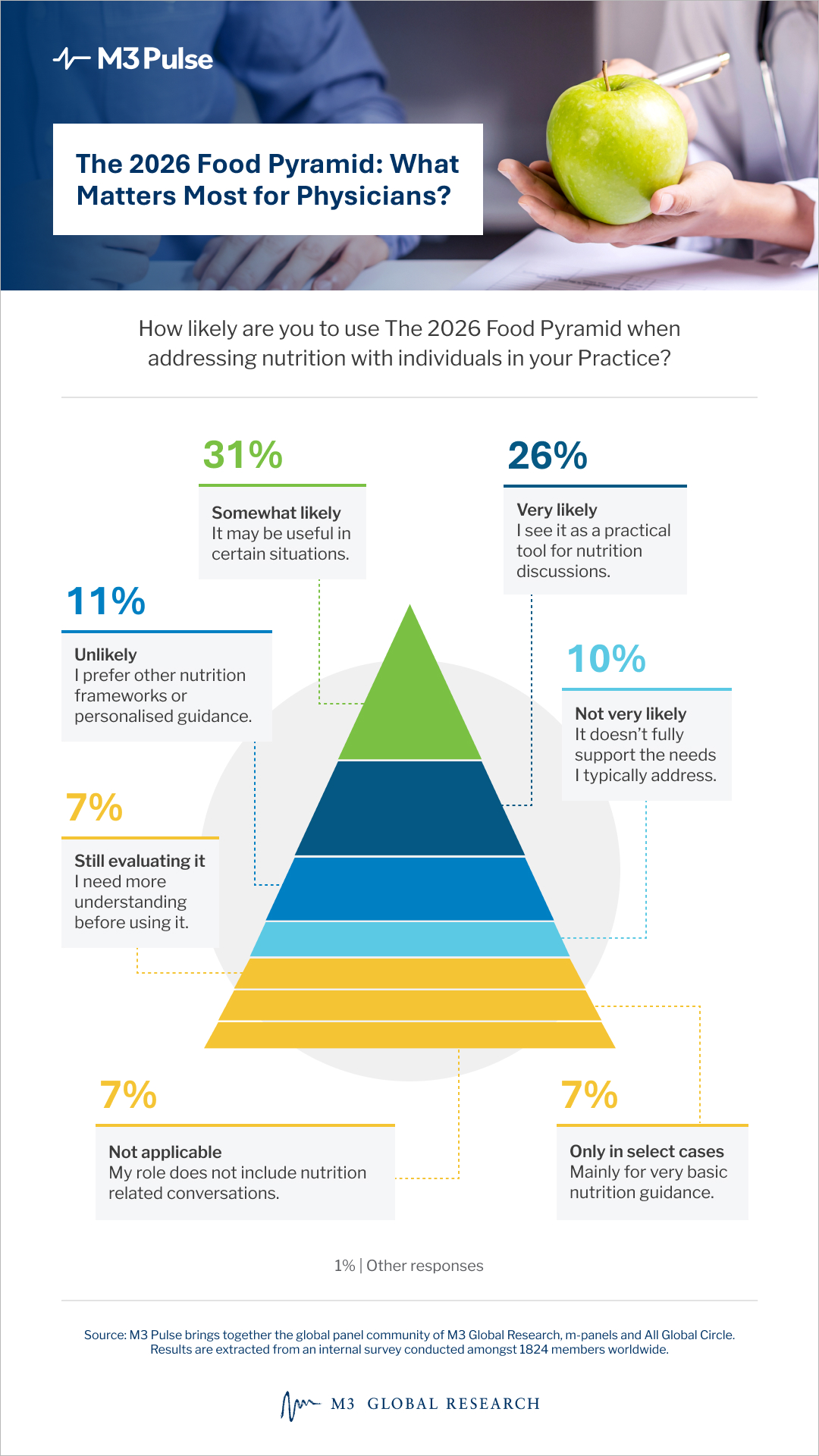
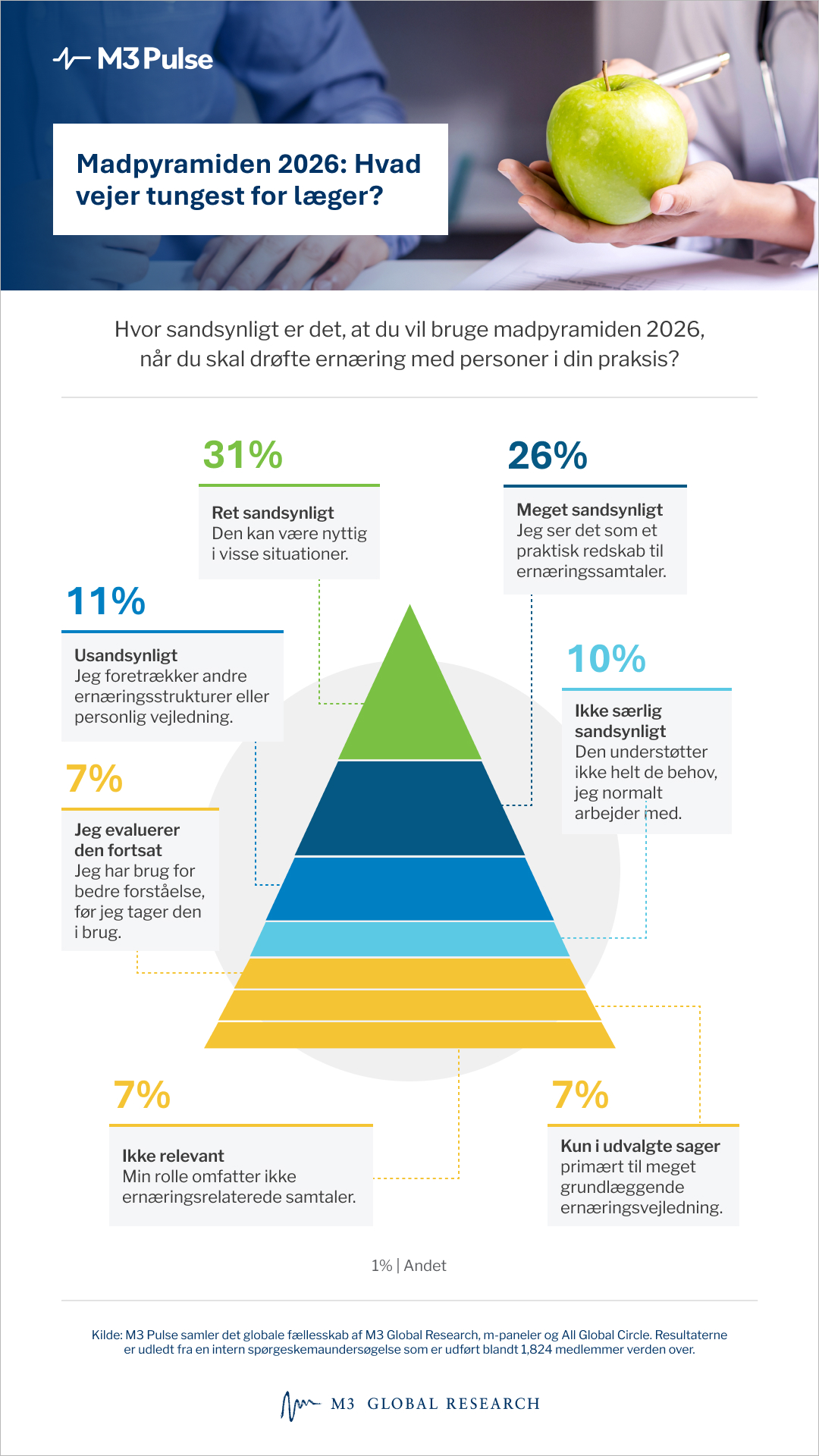
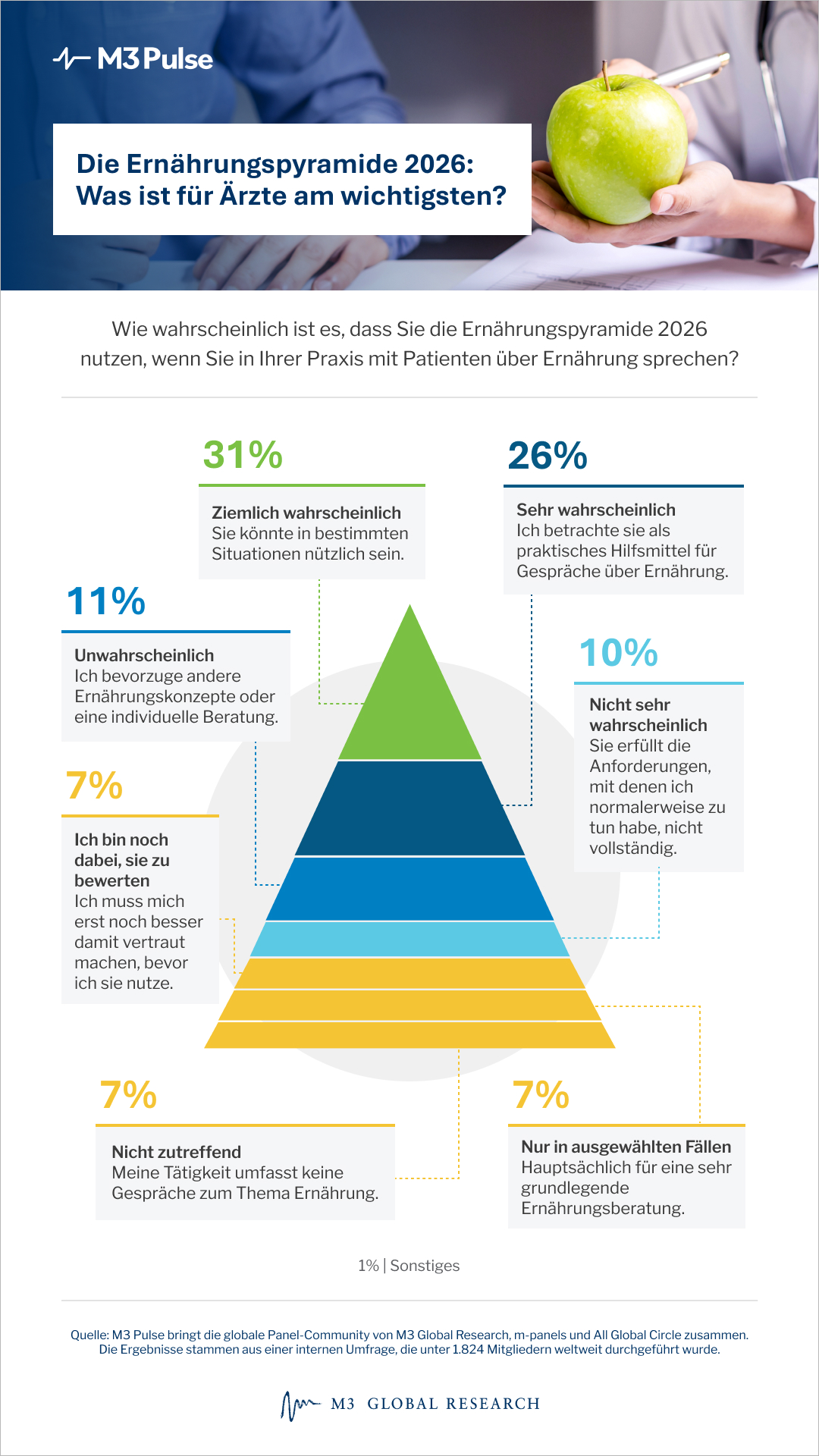
How likely are you to use the 2026 Food Pyramid when addressing nutrition with individuals in your practice?
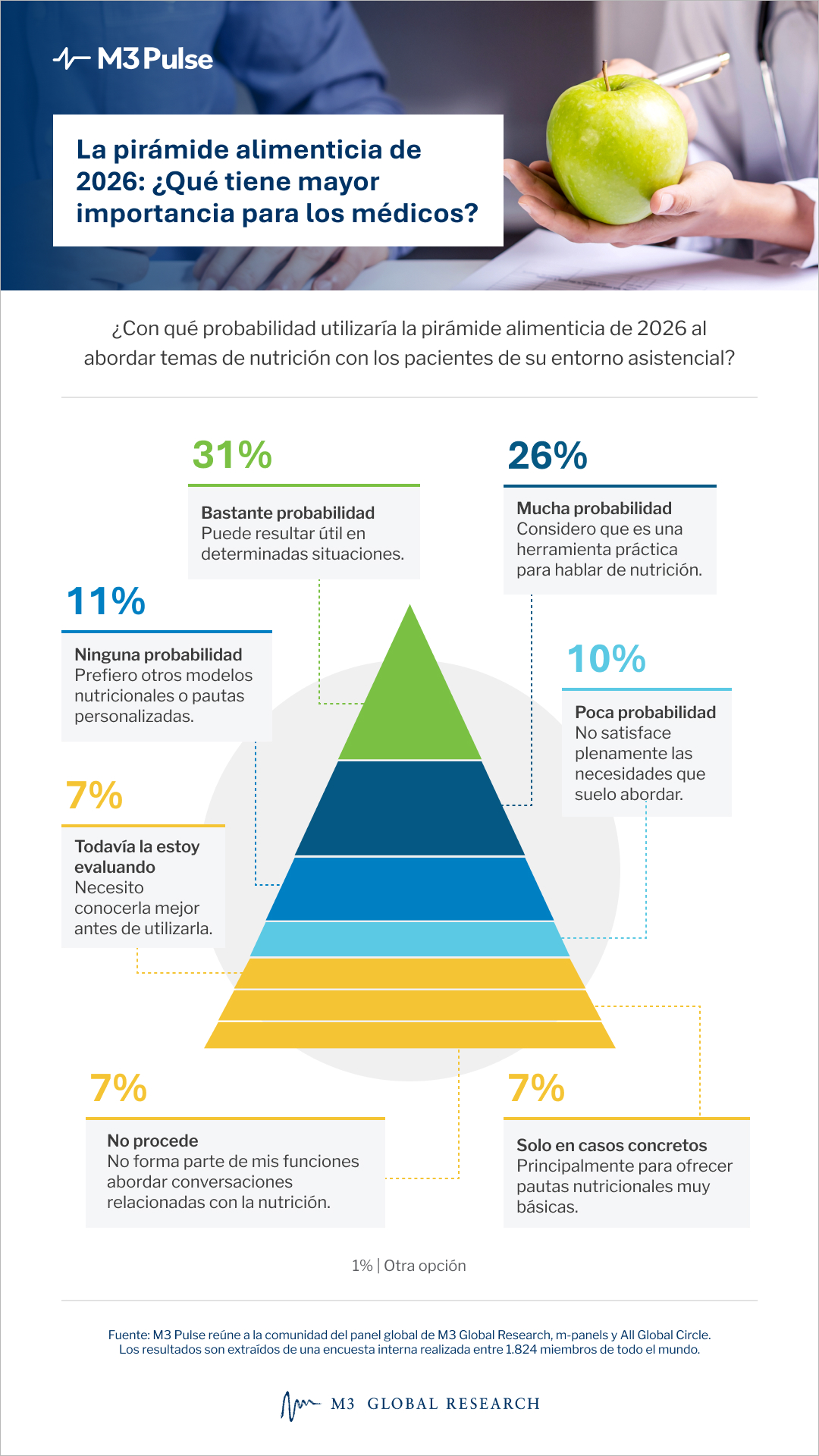
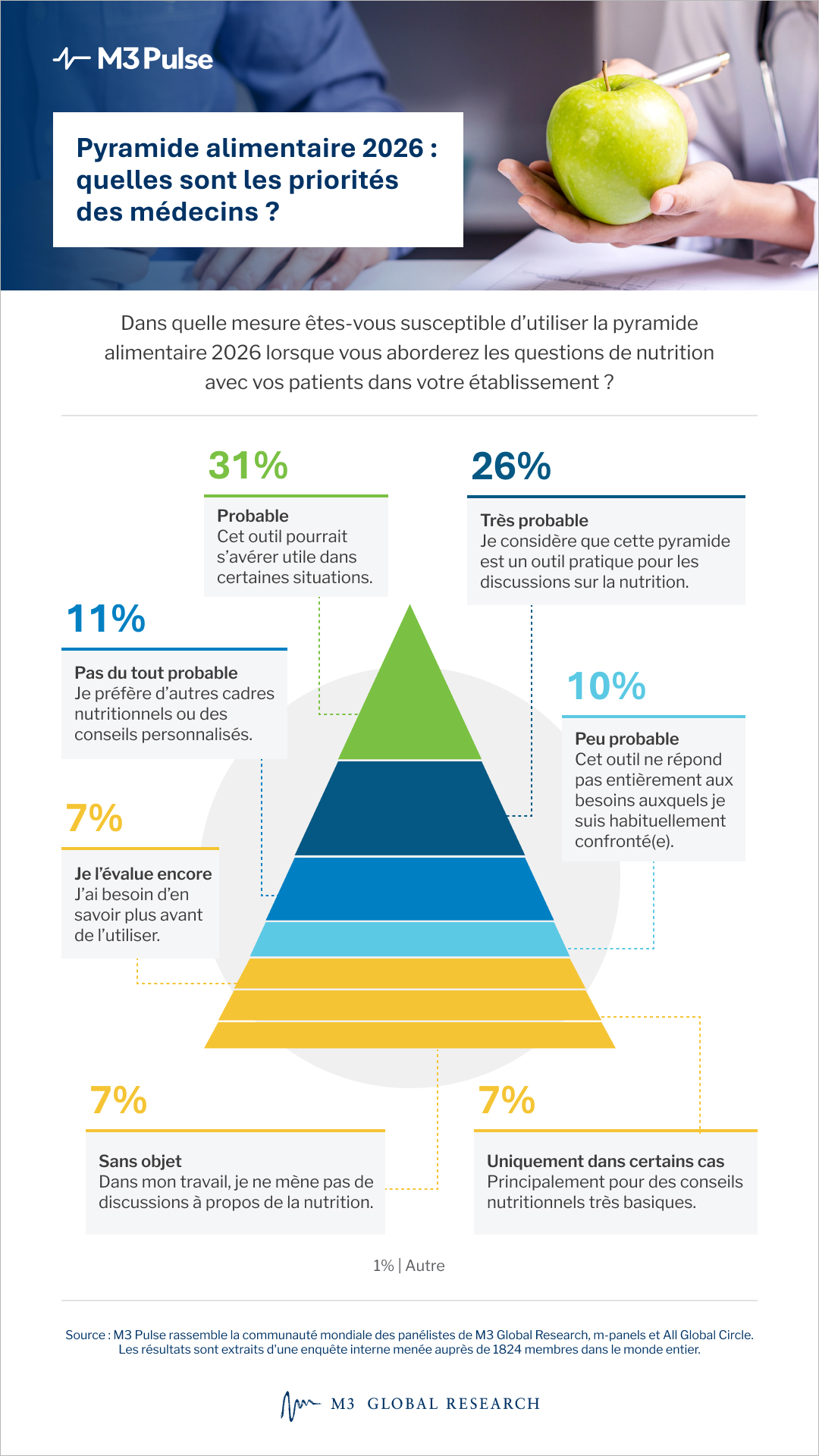
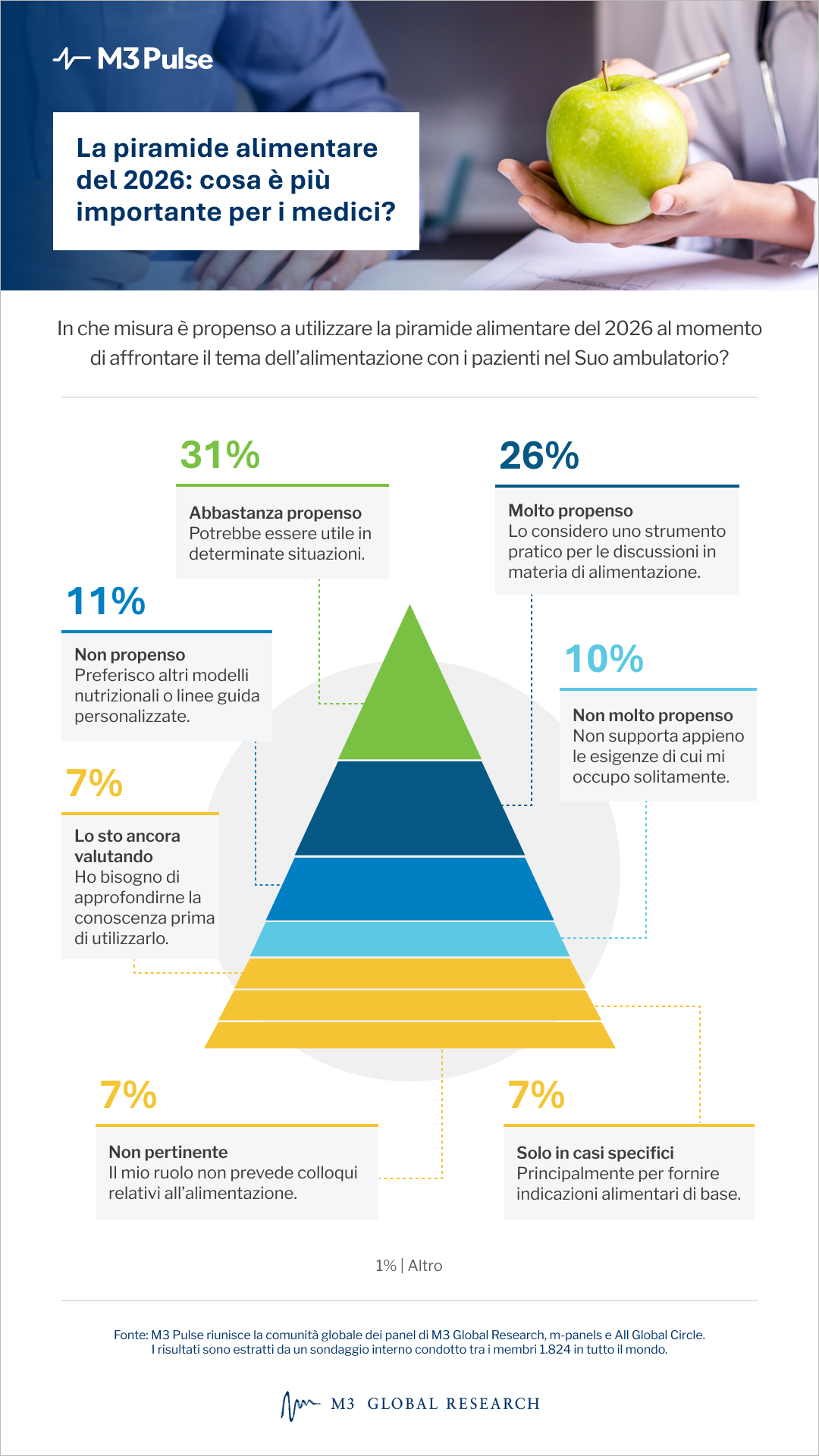
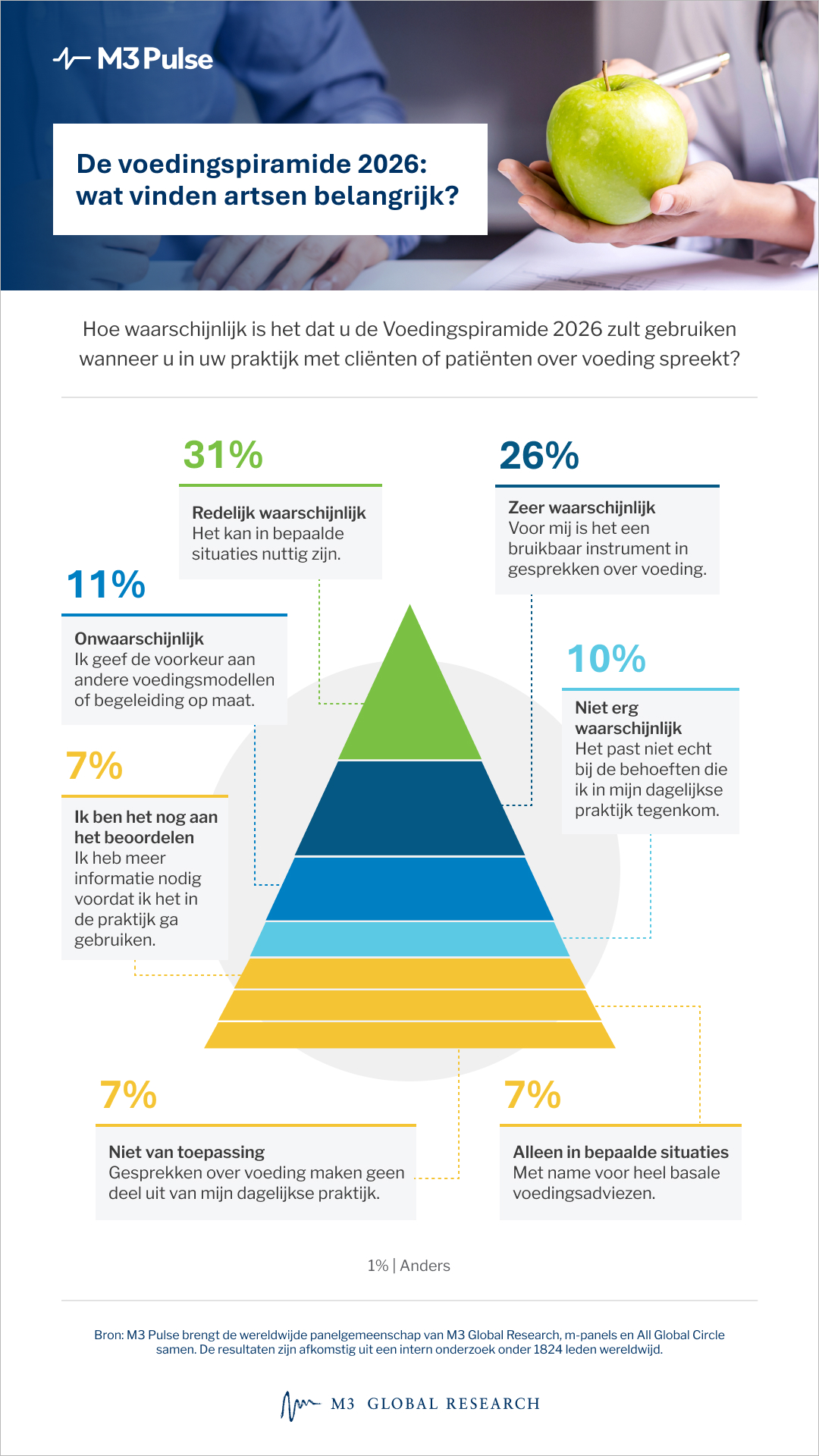
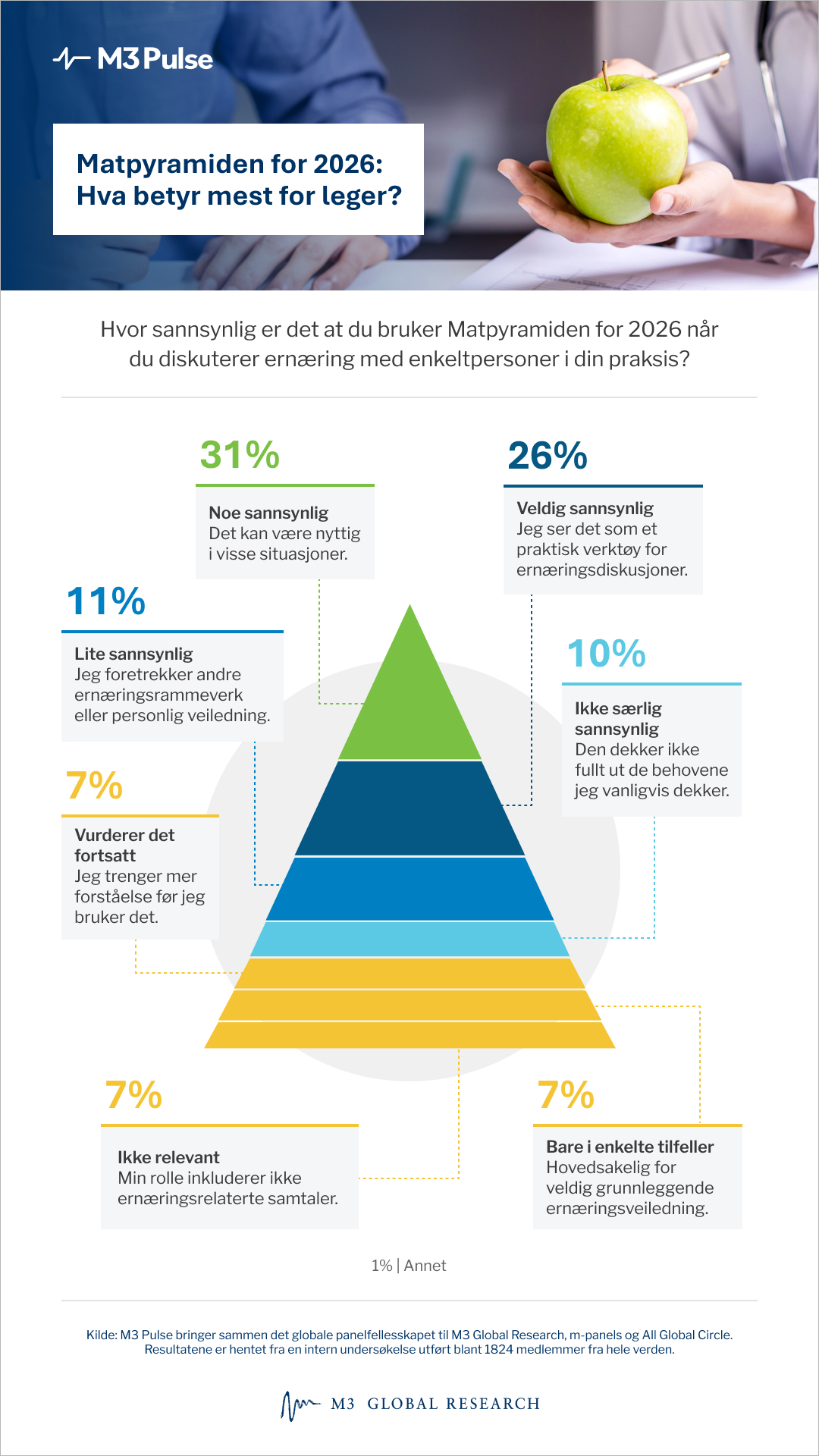
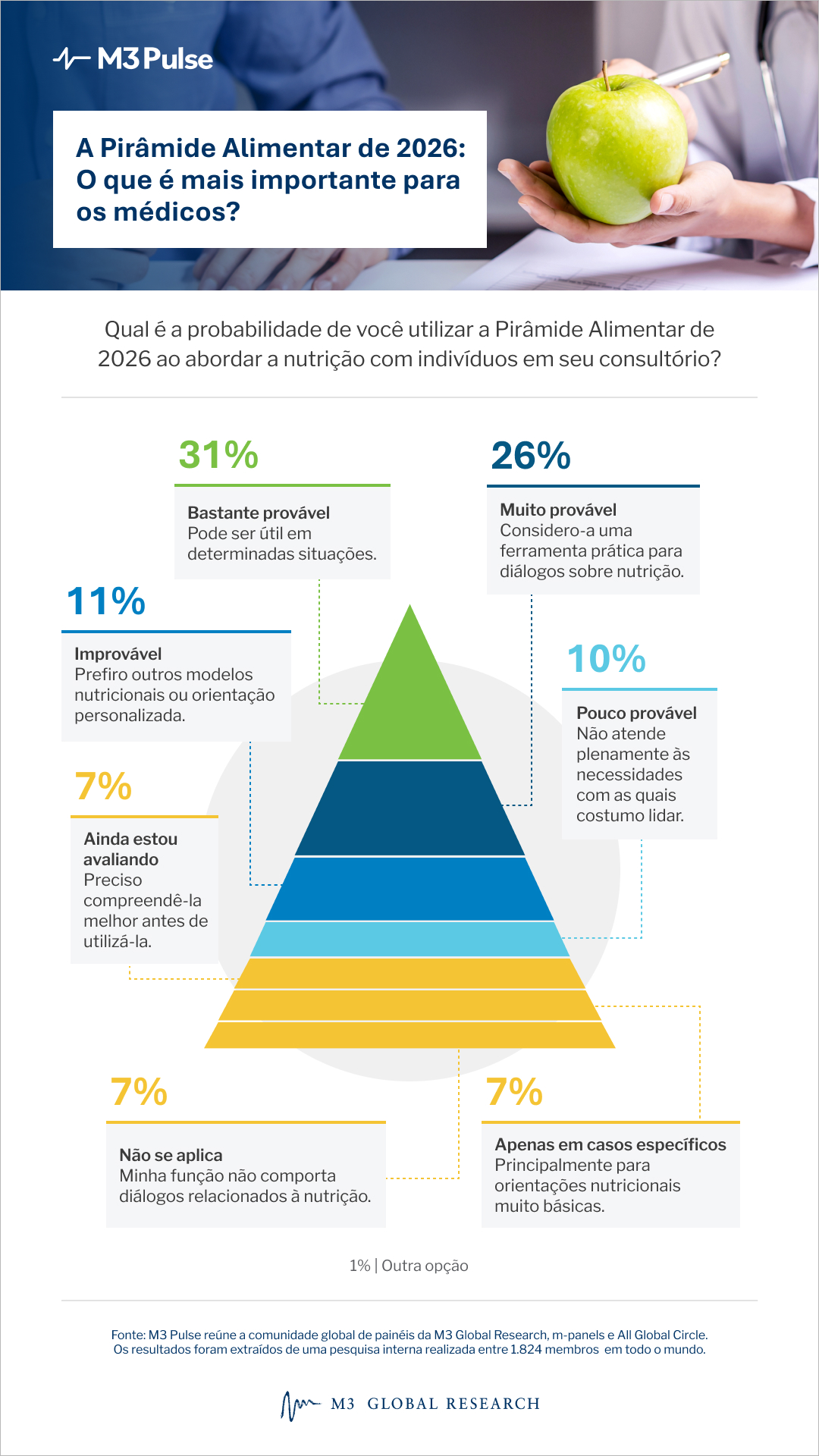
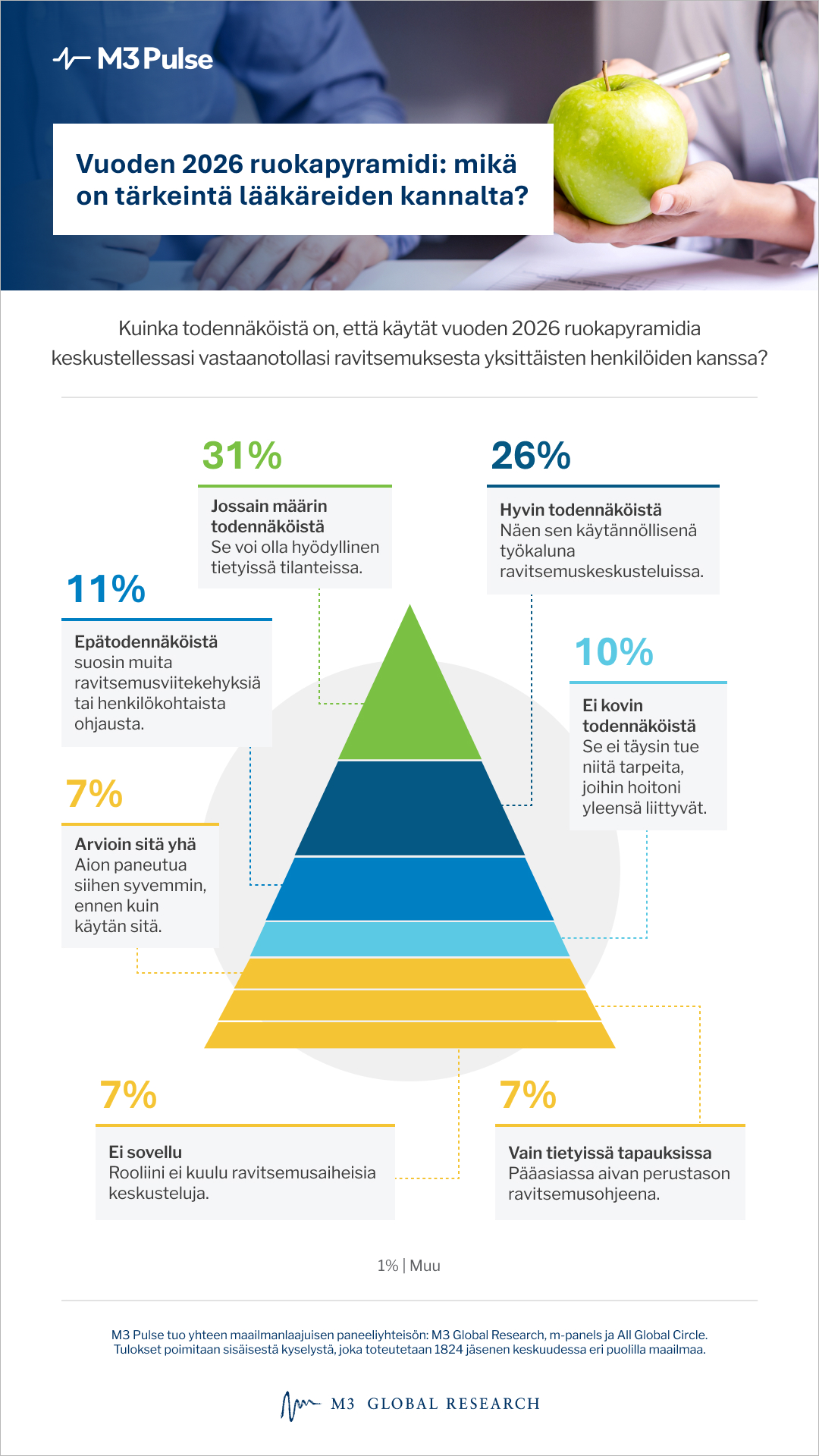
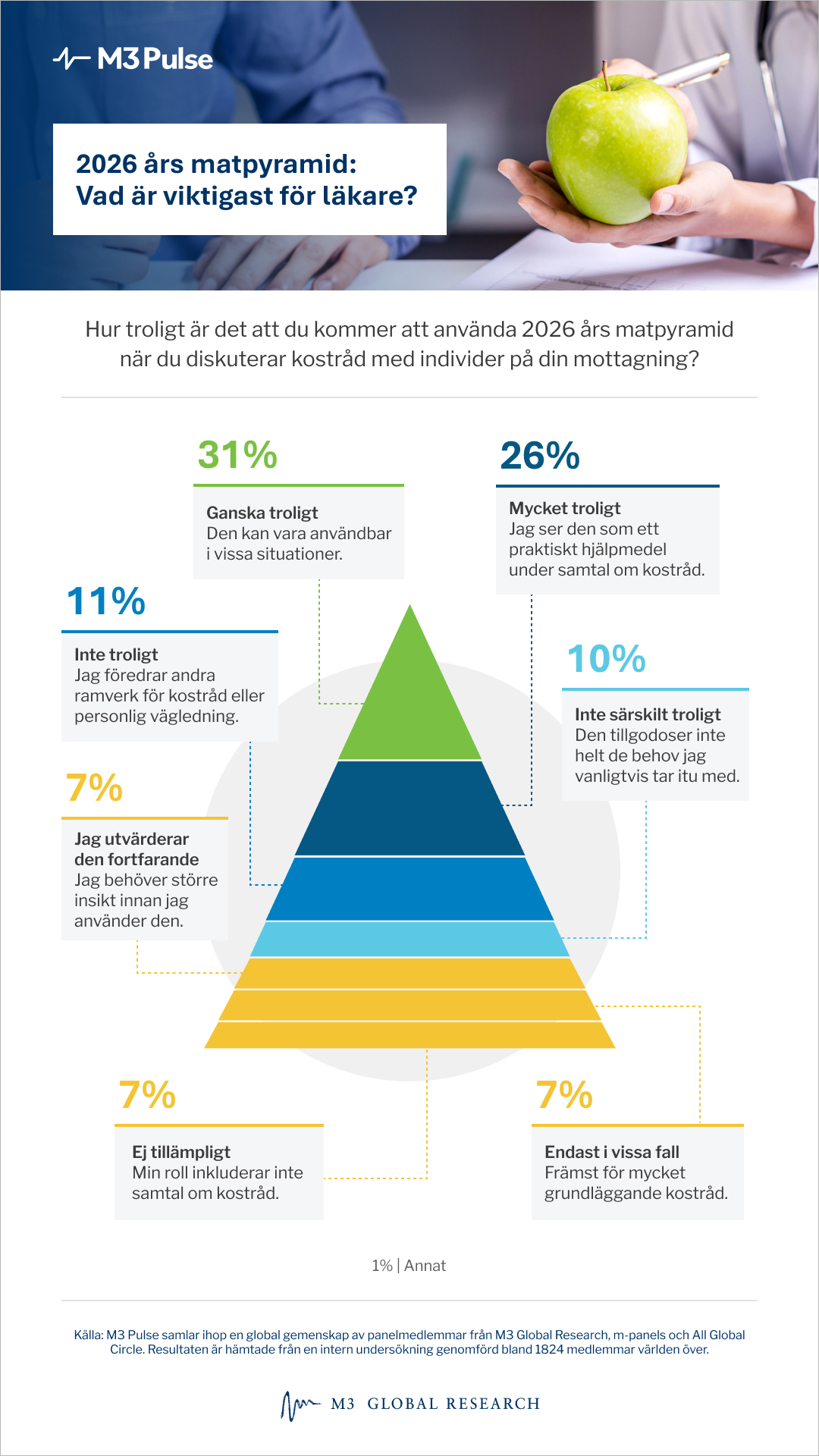
Out of the given options, the results show 31% of physicians said they would be somewhat likely to use the 2026 Food Pyramid in practice, making it the most selected response. This was followed by 26% who chose very likely, indicating more than a quarter already see it as a practical tool for nutrition discussions.
In contrast, 11% selected unlikely and 10% chose not very likely, suggesting a meaningful minority do not feel the pyramid supports the needs they typically address.
A further 7% reported they would use it only in select cases, while another 7% are still evaluating the model and need more information before deciding. Finally, 7% selected not applicable, reflecting nutrition conversations are not part of everyone’s role, and 1% chose other.
*Please select your language
M3 Pulse is a one-question online survey we conduct every month with our M3 panel members. It´s a fun and easy way to share your opinions about trending healthcare topics, like the shortage of physicians, with healthcare professionals worldwide. If you want to participate in this month´s M3 Pulse, register and join the M3 panel today.

Patient Education as a Frontline Response
These findings reflect an important insight. Physicians are not responding with a clear consensus of full adoption or full rejection. Instead, the results point to selective, situation-dependent use, where the pyramid may work best as an entry-level framework rather than a default tool for every patient.
This perspective matters because it highlights how physicians tend to integrate new nutrition models into real-world care. Many appear willing to use the 2026 Food Pyramid as a starting point for basic guidance, particularly when a patient needs simple, actionable structure. At the same time, the combined proportion of those who are hesitant, conditional, or still evaluating suggests clinicians may need to add interpretation, especially when patient risk profiles and more nuanced dietary advice come into play.
Taken together, the results suggest an opportunity and a constraint. The pyramid may help streamline certain conversations, but wider routine use will likely depend on clearer guidance on practical application, including how it should be adapted for different patient groups and how it aligns with existing evidence-based counselling approaches.
Where Does this Land in Your Practice?
The 2026 Food Pyramid may be a helpful visual prompt, particularly when patients are looking for simple nutrition guidance that prioritises healthy fats and protein and reduces reliance on ultra-processed foods. At the same time, its real value in practice will depend on how clearly it supports day-to-day decision-making and how confidently clinicians can translate it into personalised, risk-aware advice, especially when saturated fat guidance needs to be more specific. In other words, the pyramid can start the conversation, but clinical judgement and patient context still finish it.
If you could edit the 2026 Food Pyramid, what one change you’d make to improve nutrition guidance for patients and reduce confusion around healthy fats and protein or saturated fat guidance? Reply in the comments section below.
Join the M3 Panel
Would you like to be rewarded for your medical expertise? Join M3 today and share your opinion



One Response
This article does a great job highlighting how nutrition frameworks are evolving, but it also reminds us that translating them into patient-specific advice is where the real challenge lies. Clinicians have to balance these broad guidelines with individual needs, which makes discussions about fats, proteins, and even grains more nuanced than ever.