Across Europe, the regulatory landscape for medicines is entering a period of substantial change. The European pharmaceutical reform is the most significant overhaul of pharmaceutical regulation in Europe in more than two decades, and it aims to improve access to medicines in Europe, reduce medicine shortages, strengthen medicine availability, and support greater prescribing flexibility across Member States. For physicians, the practical impact may not be immediate or uniform, but as the new rules move through adoption and into implementation, they could influence how and when treatments become available within national healthcare systems. The central question for clinical practice is whether reform on paper will translate into more reliable access at the point of care.
The reform modernises the framework that governs how medicines are developed, authorised and supplied across the European Union, replacing legislation that has been in place for more than twenty years. According to the European Medicines Agency, it represents the most significant revision of the EU medicines framework in over two decades, with the adopted acts expected to enter into force in 2026 and a transition period running to 2028 as Member States align their national laws.* The European Commission has set out its core objectives: timely and equitable access to safe, effective and affordable medicines, stronger security of supply so that medicines are available regardless of where patients live, and an environment that continues to support innovation.* For clinicians, these aims matter because treatment decisions often depend on whether a medicine is accessible, reimbursed and reliably available.
This blog explores the following key areas:

The European Pharmaceutical Reform: A Major Regulatory Shift
The European pharmaceutical reform brings together several strands of medicines regulation that have developed separately over the past two decades. It revises the general pharmaceutical legislation alongside the rules for medicines for children and for rare diseases, with the aim of making medicine availability more consistent across the European Union. In December 2025, the Council of the EU and the European Parliament reached a political agreement on the package, presenting it as a step towards fairer access to safe, effective and affordable medicines and towards a more competitive pharmaceutical sector, with stronger measures to prevent and manage shortages.* Much of the reform is intended to support faster and broader access to essential medicines, close gaps in supply, and encourage innovation that responds to unmet medical needs.
For clinicians, the relevance extends beyond policy to the point of prescribing, where access to medicines is rarely determined by regulatory approval alone. Even after a medicine is authorised, national reimbursement decisions, local formulary restrictions, procurement processes, supply limitations and regional prescribing rules can all shape how quickly it becomes a practical option for patients. Those factors help explain why the impact of pharmaceutical regulation in Europe may vary from one healthcare system to another, and why prescribing flexibility can differ between countries and care settings.

Could the Reforms Improve Access to Medicines?
One of the central aims of the reform is to reduce variation in medicine availability across Europe. In principle, more consistent supply could support fairer access for patients, particularly in areas where delays or shortages have previously disrupted treatment pathways. Improvement may be most visible where the new rules strengthen supply resilience, encourage timely launch across markets, or reduce the barriers that contribute to unequal availability between countries.* The reform also sits alongside wider EU efforts to secure the supply of critical medicines, reflecting how prominent shortages have become on the policy agenda.
In practical terms, physicians in some therapeutic areas may see more predictable medicine availability, fewer disruptions linked to supply shortages, and earlier access to selected treatments within national systems. The extent of any benefit, however, is likely to depend on how the reform interacts with national healthcare policies, pricing decisions, and reimbursement processes. Regulatory change can create the conditions for broader access to medicines in Europe, but local implementation determines whether those conditions reach the clinic. For that reason, the reform is better understood as a framework that enables improvement rather than a guarantee of it.

Expected Impact of European Pharmaceutical Reform on Clinical Practice
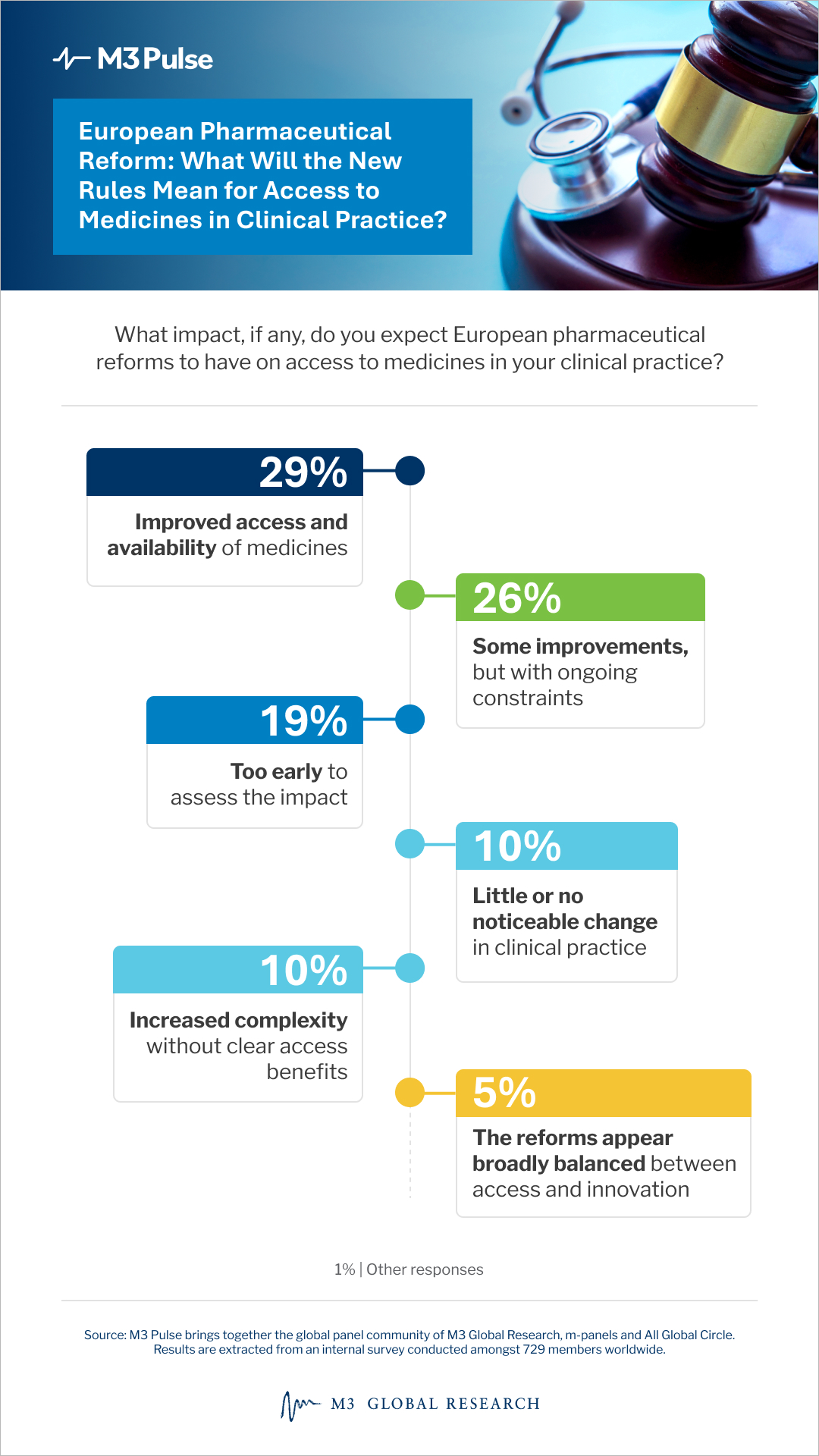
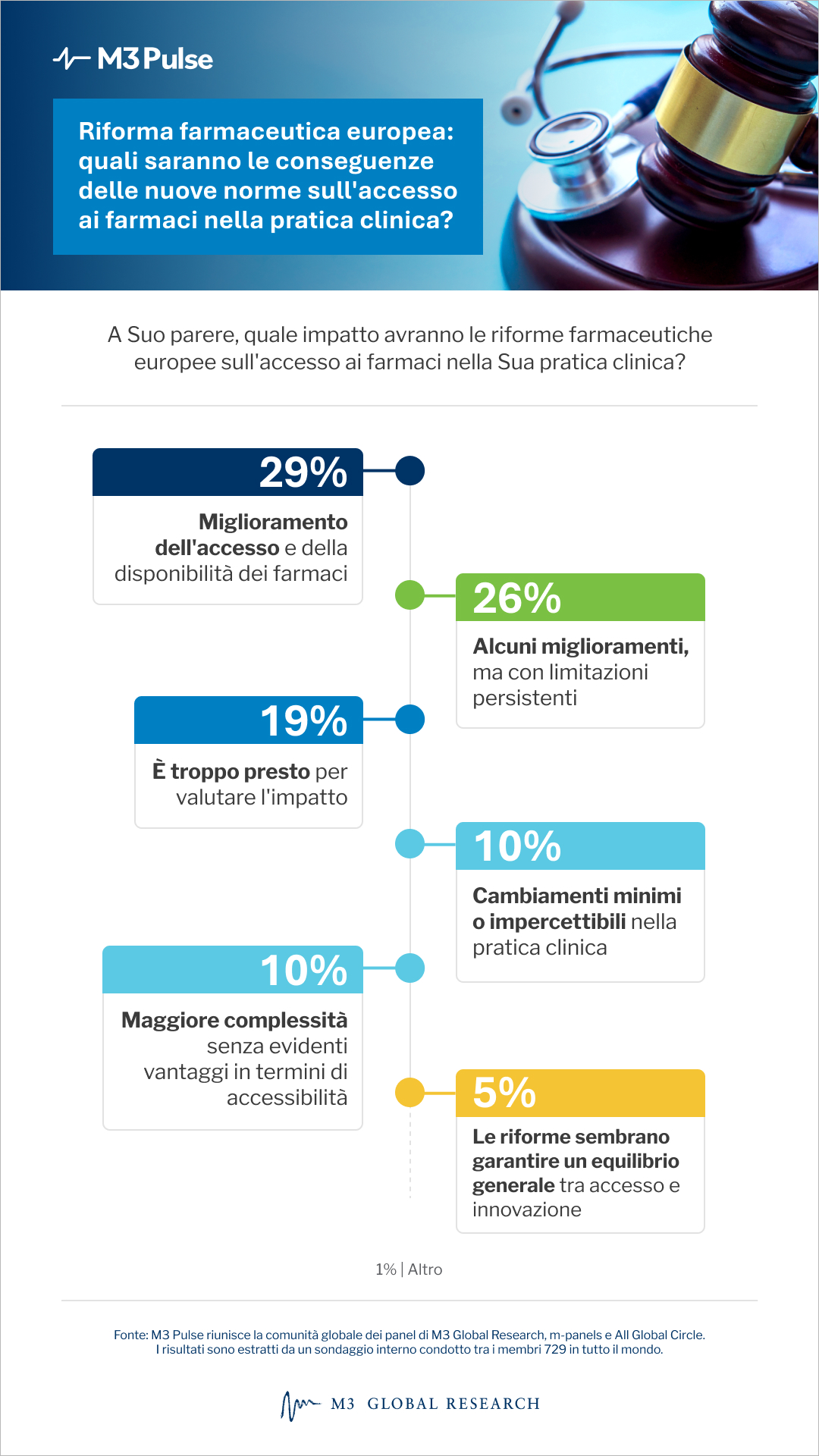
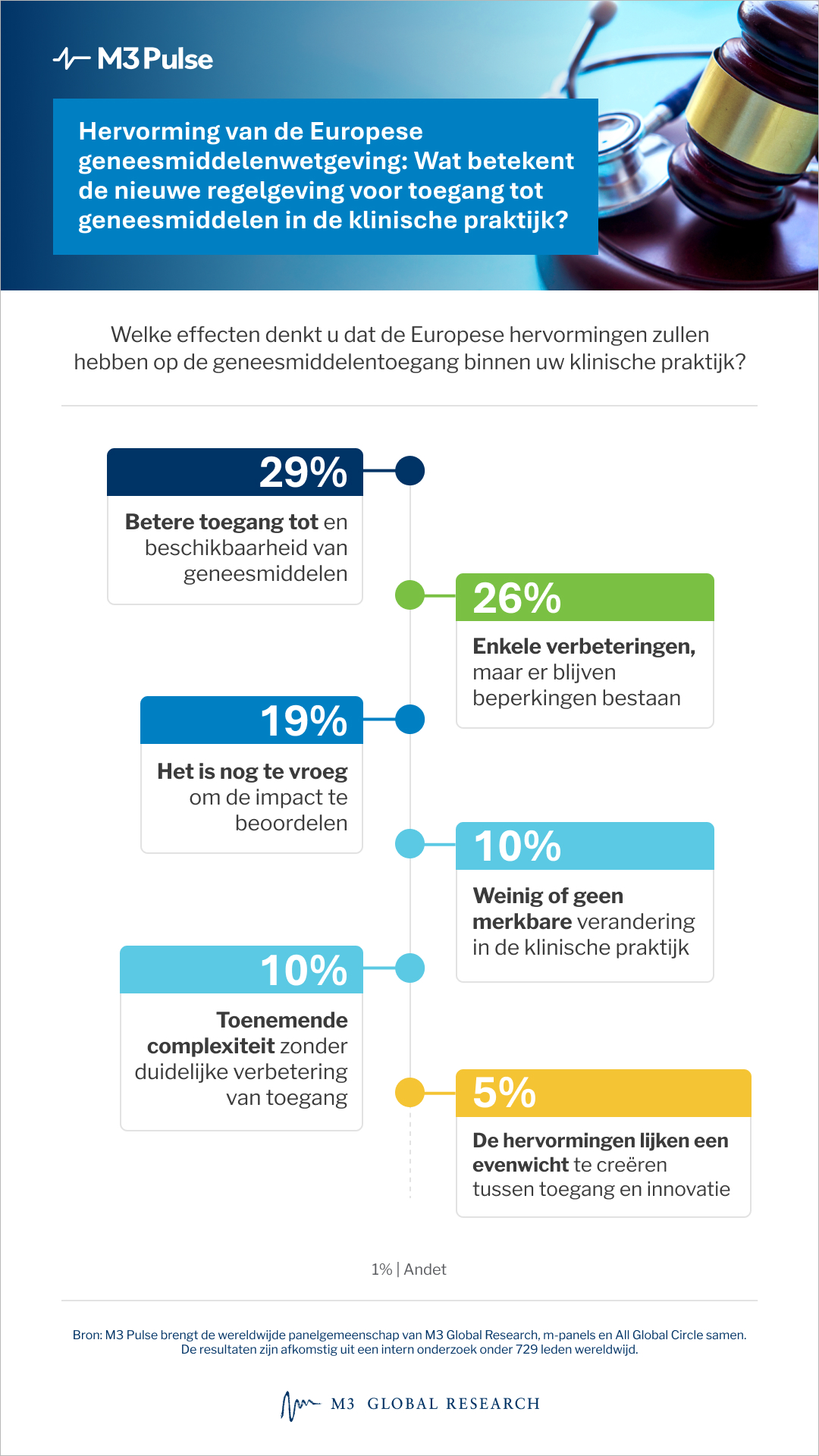
To understand how physicians expect the European pharmaceutical reform to influence access to medicines in everyday clinical practice, we asked 729 physicians the following question:
What impact, if any, do you expect European pharmaceutical reforms to have on access to medicines in your clinical practice?
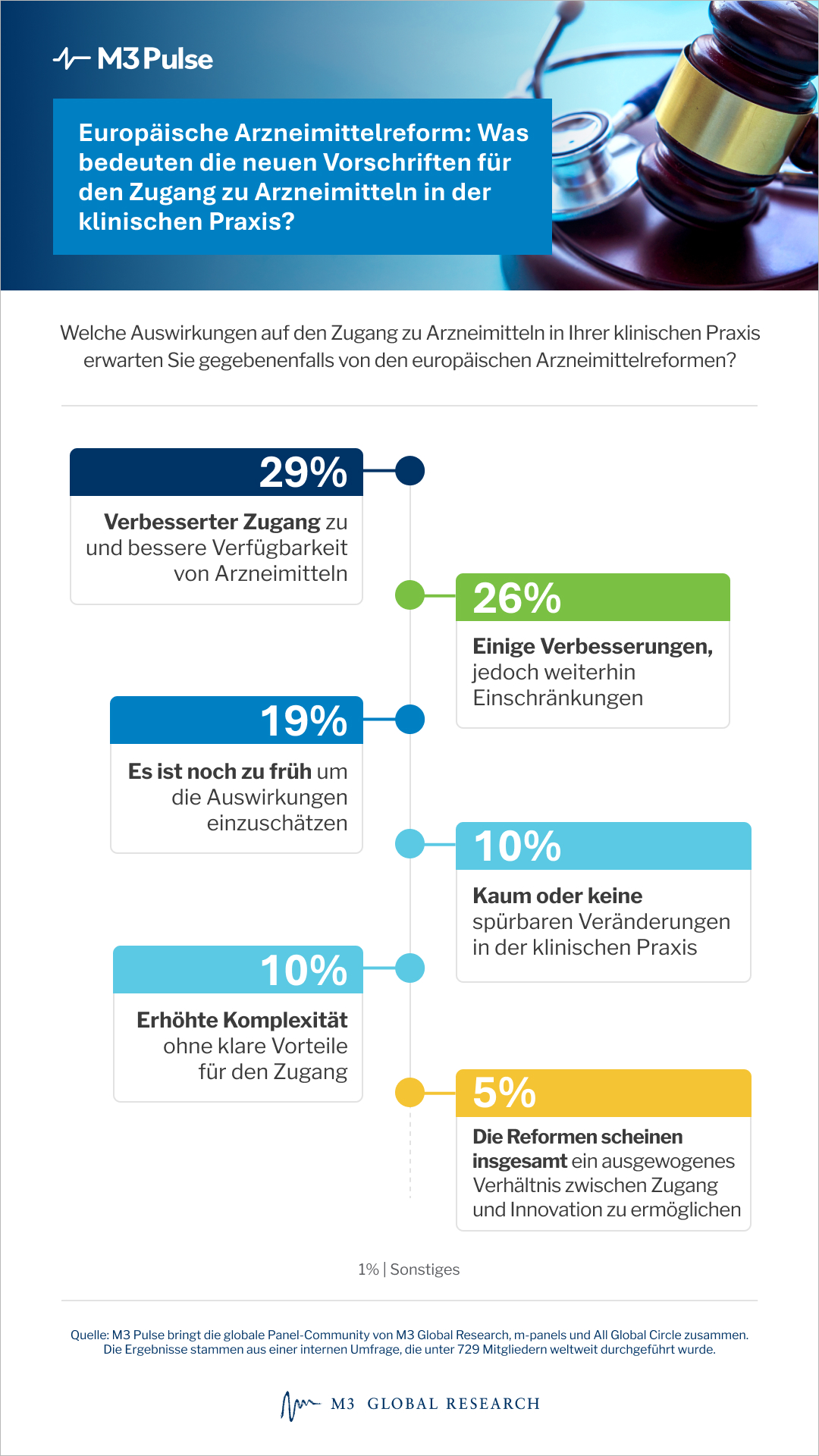
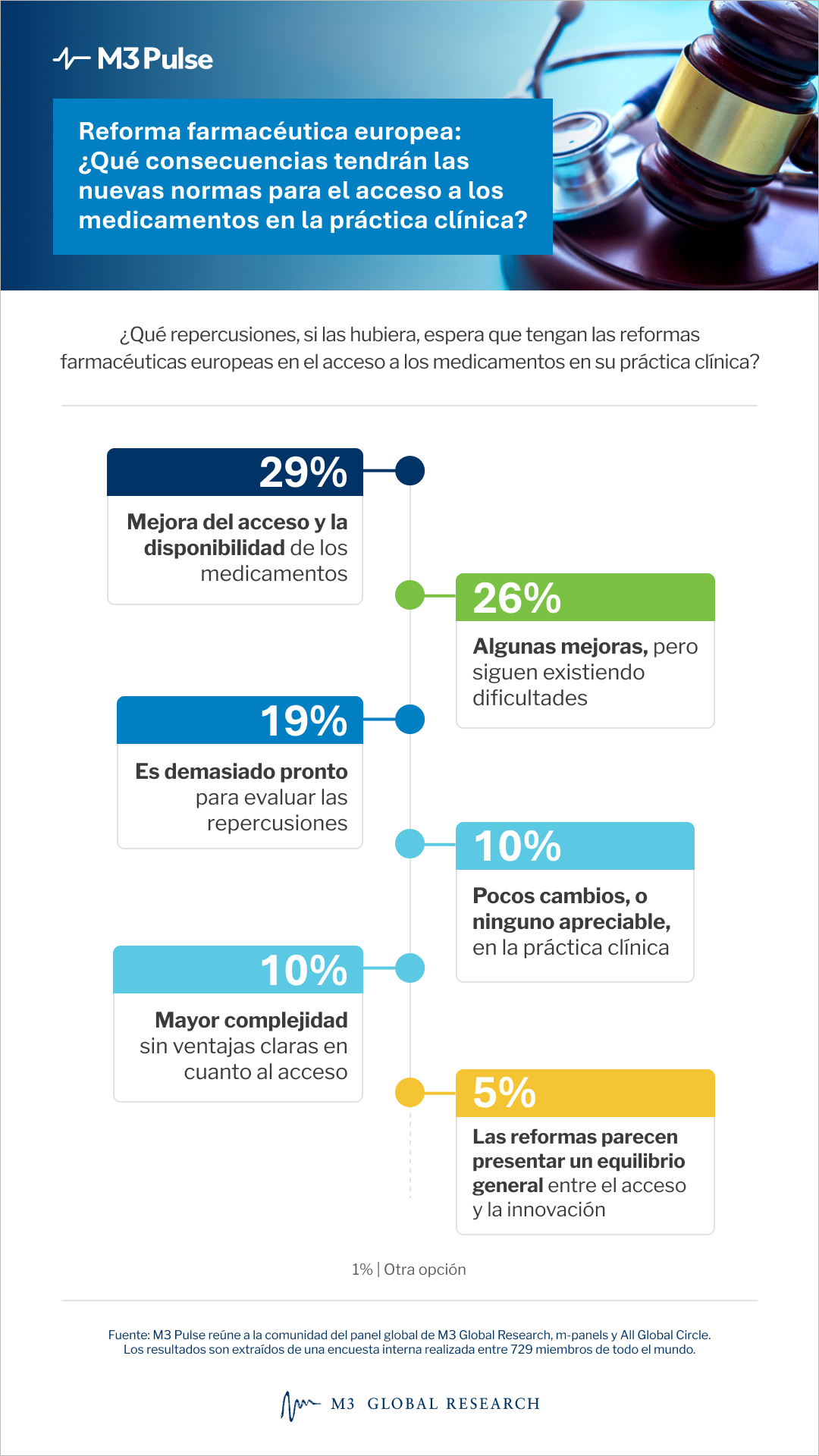
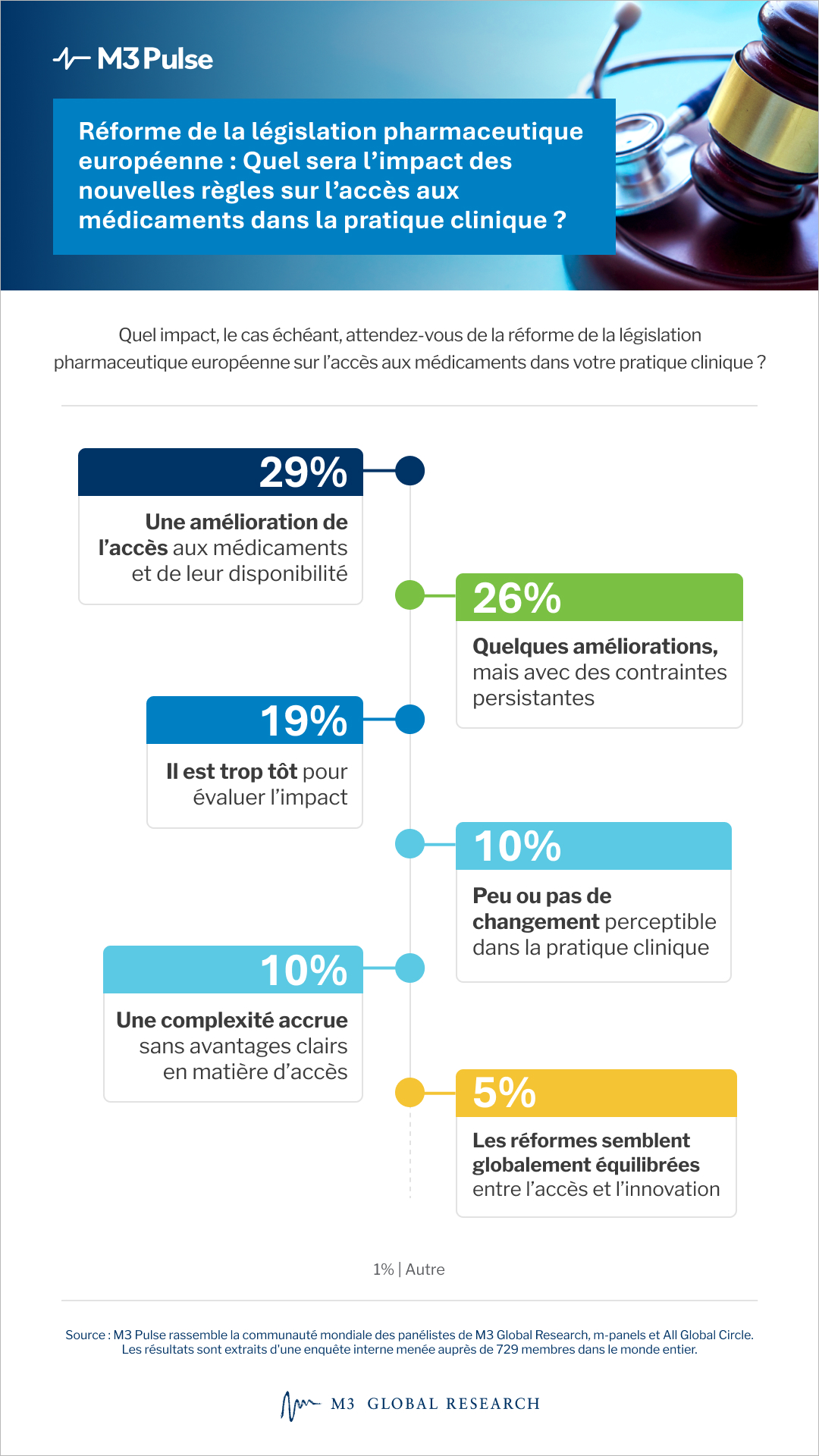
Out of the given options, the results show 29% of physicians expect the reforms to improve access to and availability of medicines, making it the most selected response. This was followed by 26% who anticipate some improvements but with ongoing constraints, suggesting cautious optimism that the reforms will strengthen medicine availability while recognising that implementation challenges are likely to remain.
A further 19% said it is too early to assess the impact, reflecting uncertainty as the reforms continue to progress through adoption and implementation. Meanwhile, 10% expect little or no noticeable change in clinical practice, while another 10% believe the reforms may increase complexity without delivering clear access benefits, indicating that some physicians remain unconvinced about the practical implications. Finally, 5% felt the reforms appear broadly balanced between improving access and supporting innovation
*Please select your language

What Could This Mean for Prescribing Flexibility?
Prescribing flexibility depends on more than regulatory approval. It is shaped by local availability, clinical guidelines, formulary inclusion, reimbursement and the reliability of supply. As the reform is implemented, clinicians may see a mixed picture: some areas could benefit from improved access and stronger supply planning, while others may continue to face constraints linked to national processes or regional variation.
The range of possible outcomes is wide. In some settings the reform may deliver improved access and availability of medicines; in others it may bring partial gains that sit alongside ongoing constraints. Some clinicians may notice little or no change in day-to-day practice, and a few may find that added regulatory complexity arrives without clear access benefits. Others may judge the overall approach to be broadly balanced between access and innovation, or conclude that more time is needed before the clinical impact can be assessed. This spread reflects the difficulty of translating regulatory reform into everyday clinical practice, where the same rules can produce different results depending on how they are applied nationally.
How do you expect European pharmaceutical reform to affect access to medicines in your practice? Share your perspective in the comment section below.
Join the M3 Panel
Would you like to be rewarded for your medical expertise? Join M3 today and share your opinion